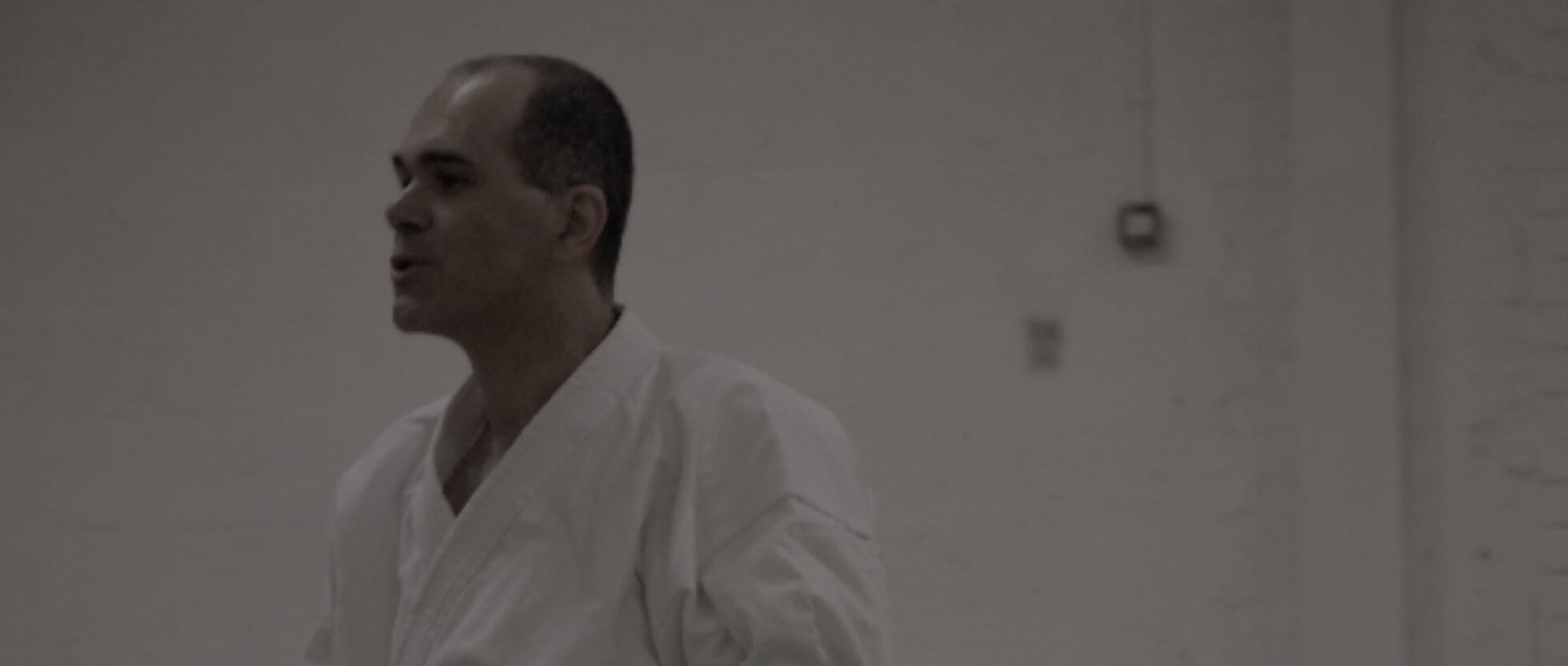
Shiho nage
Tenchi, kokyu, kaiten, kaeshi, and shiho are technical principles present in every Aikido technique. Every Aikido technique must respect all of them in order for the unique principle of irimi in Aikido to be a reality.
Philippe Voarino studied at the dojo of the Founder of Aikido, in Iwama. Master Saito passed on his method to him, encouraging him to discover, beyond this teaching tool, the true art of O Sensei.
Tenchi, kokyu, kaiten, kaeshi, and shiho are technical principles present in every Aikido technique. Every Aikido technique must respect all of them in order for the unique principle of irimi in Aikido to be a reality.
The four great laws of the Aiki system have been reduced, in modern Aikido, to the four fundamental immobilisations, which are only one particular aspect of the four laws.
Without kaiten, without rotation, tenchi is ineffective; without tenchi, rotation is ineffective.
A French mind will always find it difficult to understand the part of the British character that has remained foreign to him.
Aiki-do is a method of controlling a person using his arm. Ikkyo is at the beginning of Budō as the form that best illustrates this method.
There are four kajos because there are four possible combinations of the three joints in the human arm. There are no more than that, which is why O Sensei speaks of only four Laws in Budō.
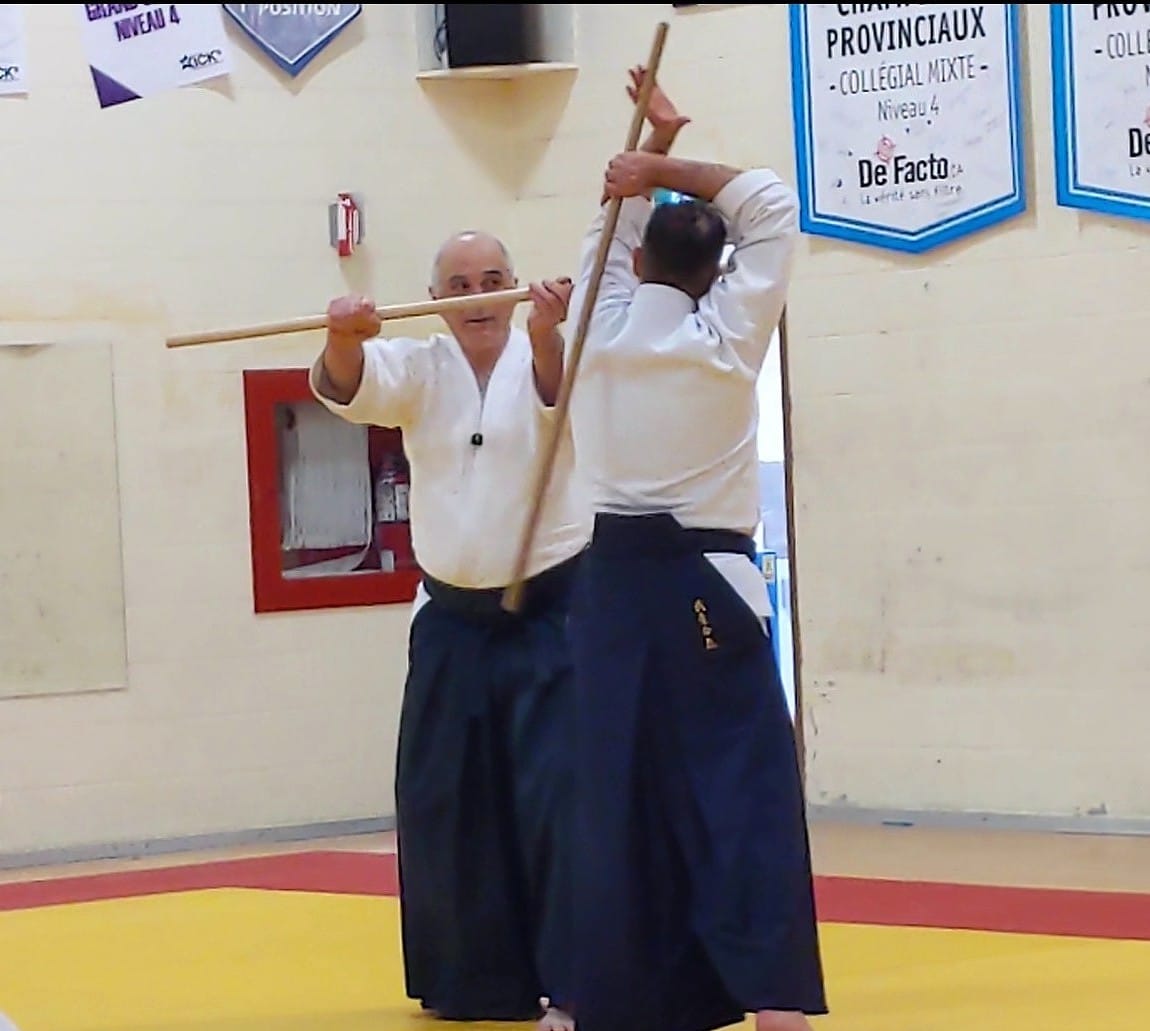
From the moment of the grab, uke tachi's right forearm passes under uchi tachi's left forearm and lifts him off the ground by projecting ki towards the sky